Space of ‘And’
Jacques Derrida (1930–2004), in one of his essays, comments on the word “and” (et).
He writes: “The astonishment concerning the mode of being of and—that is, the astonishment that and both has and does not have meaning, that it moves toward something without acting—this astonishment is … the eternal task of all deconstruction.”
—from Specters of Derrida.
The mode of existence of and is a state of standing on a boundary, on a threshold. My work likewise occupies such a position: neither belonging fully to one side nor completely departing from the other, but remaining at the boundary between a and b.
Folding and unfolding.
Opening and closing.
Connection and separation.
Part and whole.
Fixity and fluidity.
Between these paired states, the work does not clearly declare its position.
From the marks produced by folded paper, square-shaped spaces emerge. Like the chance forms of decalcomania, these square spaces fold and unfold, generating new images through their mutual relations. At times they appear as a single unit, at other times as a whole, yet they never settle into a fixed position. Instead, they continue to interact. Likewise, the bracket-like forms that repeatedly appear do not form pairs of opening and closing brackets. Each bracket becomes an independent entity, repeatedly creating empty spaces that are neither one thing nor another—peculiar, indeterminate forms. Through this relational process, semi-aleatory decalcomania-like methods, and unpaired brackets, I work to fill the space of and.
Covering the floor of my studio—a space I enter and exit daily—with standardized white paper reflects my attitude toward space itself. The moment one removes their shoes and steps onto the paper, they encounter an unfamiliar intermediate state—neither room, nor gallery, nor studio—evoking the sensation of and. The standardized paper is not arranged according to rules of regularity or irregularity, but rather attached to the floor to guide where one must stand in order to encounter the work—forming a relational pathway between the viewer and the artwork.
The somewhat narrow, precarious, and occasionally oppressive structure arises from my way of working: rather than maintaining distance from objects, I stay close to them, colliding with them, unfolding the work as if in conversation. Partitions that abruptly block the center of the space, objects standing alone in inexplicable positions, and pathways that keep the body from stepping beyond the white paper—within this space of and are embedded aspects of my own life: wandering, pausing, and searching for reasons in places where none seem to exist, within the constraints of everyday life.

<Space of ‘And’>, 2023
![]()
![]()
![]()
![]()
![]()
![]()
![]()
![]()
![]()
![]()
![]()
![]()
![]()
![]()
<Space of ‘And’>, 2023
![]()
![]()
<re-sculpting 'Name'>, 2023, wood stain on the panel,wood,paper, 140×140×45.8cm


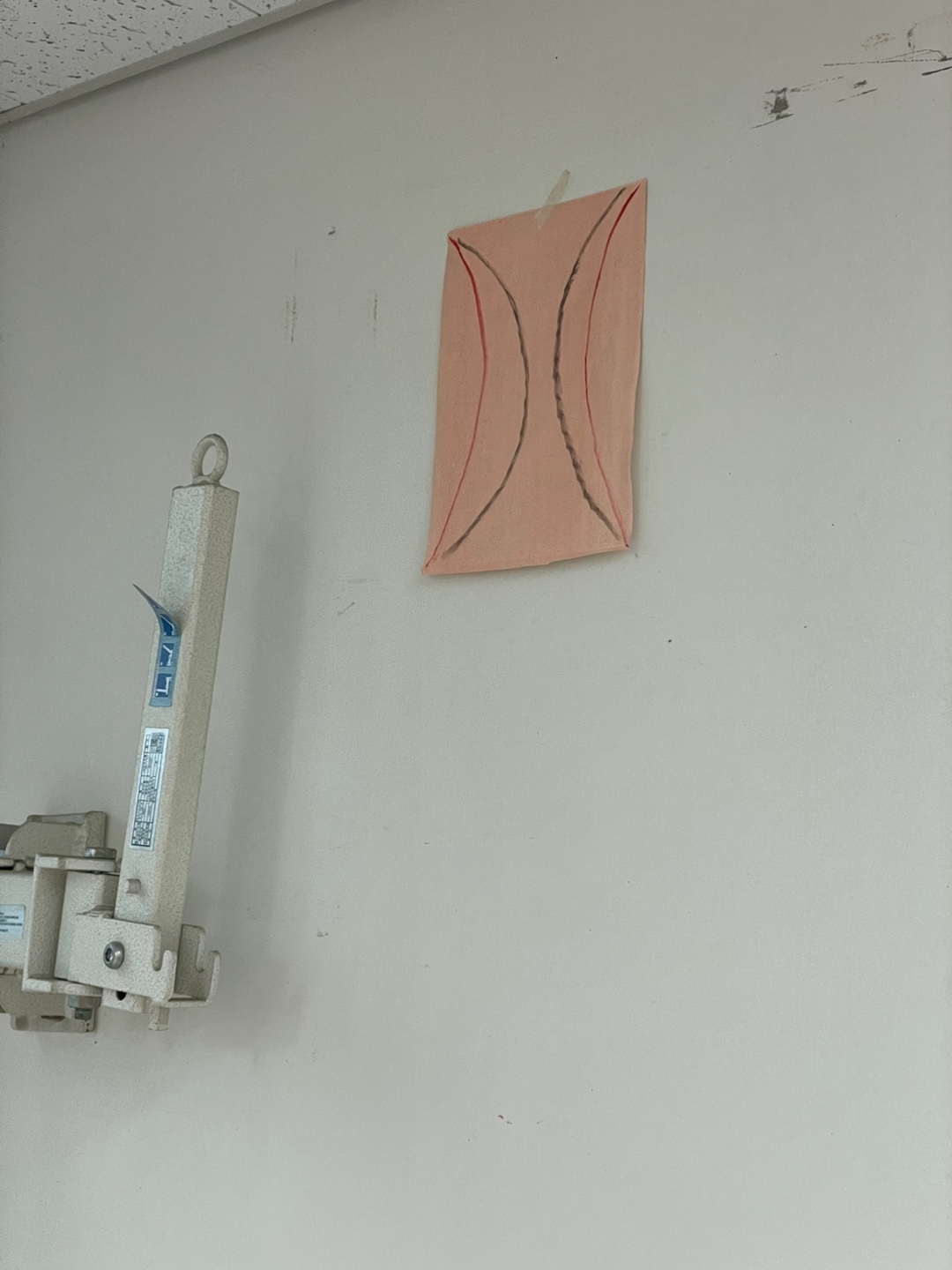
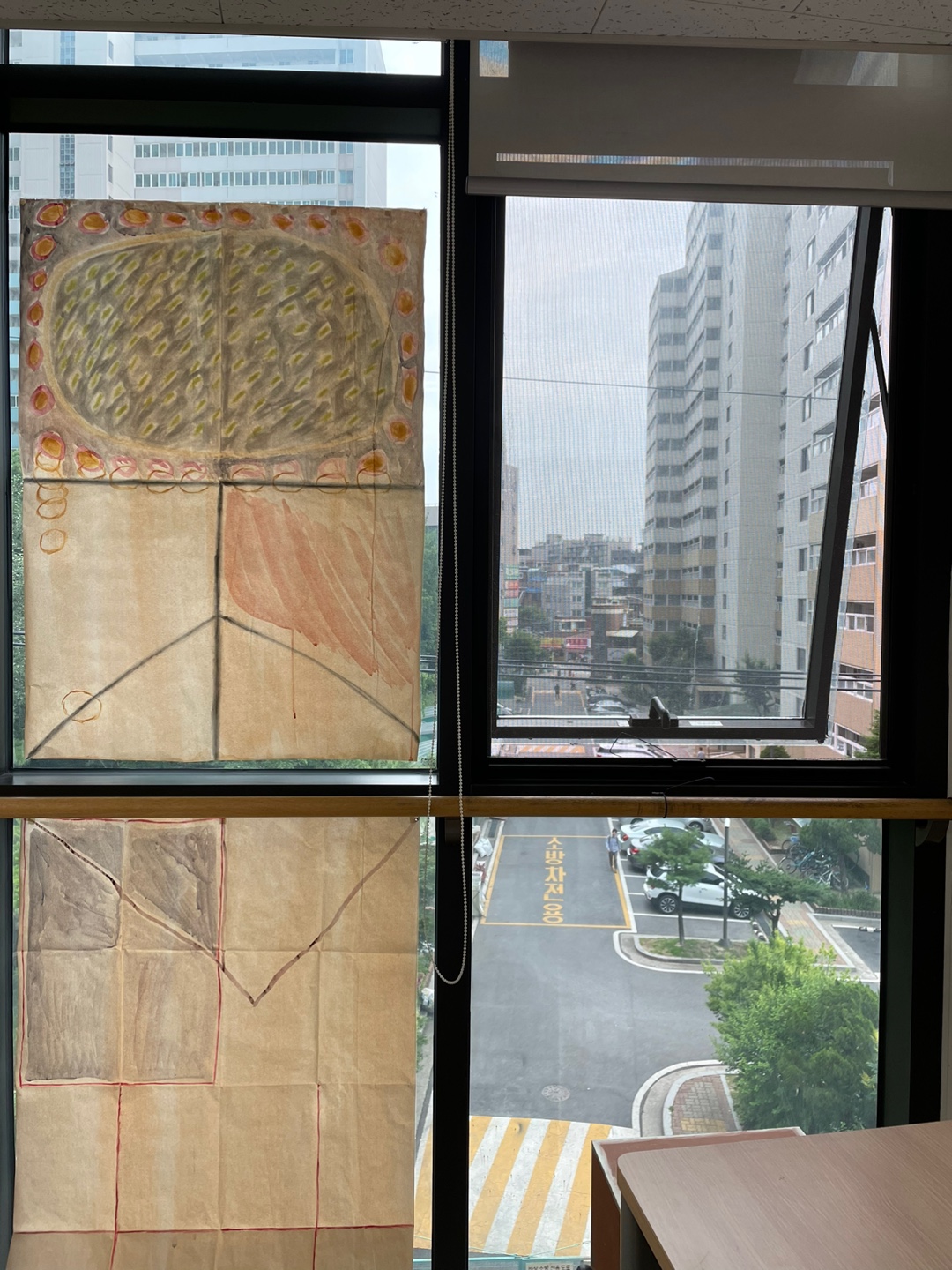


<Space of ‘And’>, 2023


<re-sculpting 'Name'>, 2023, wood stain on the panel,wood,paper, 140×140×45.8cm
<re-sculpting 'Name'>
A name is a word given to a person, object, or phenomenon in order to distinguish it from others. The objects in this work retain only their basic forms, as if their names have been erased. Resembling tables that appear to be two yet somehow one, these loosely constructed structures resist clear definition.
The act of forming relationships between objects upon these unstable structures becomes a new way of approaching the idea of naming. Much like a child who gives names to things, breathes life into them, and creates stories through role-playing, the relationships formed between the figures placed on the structures and the objects themselves allow the work to be filled with multiple narratives. Through these shifting connections, meaning emerges not as something fixed, but as something continually experienced and reimagined.